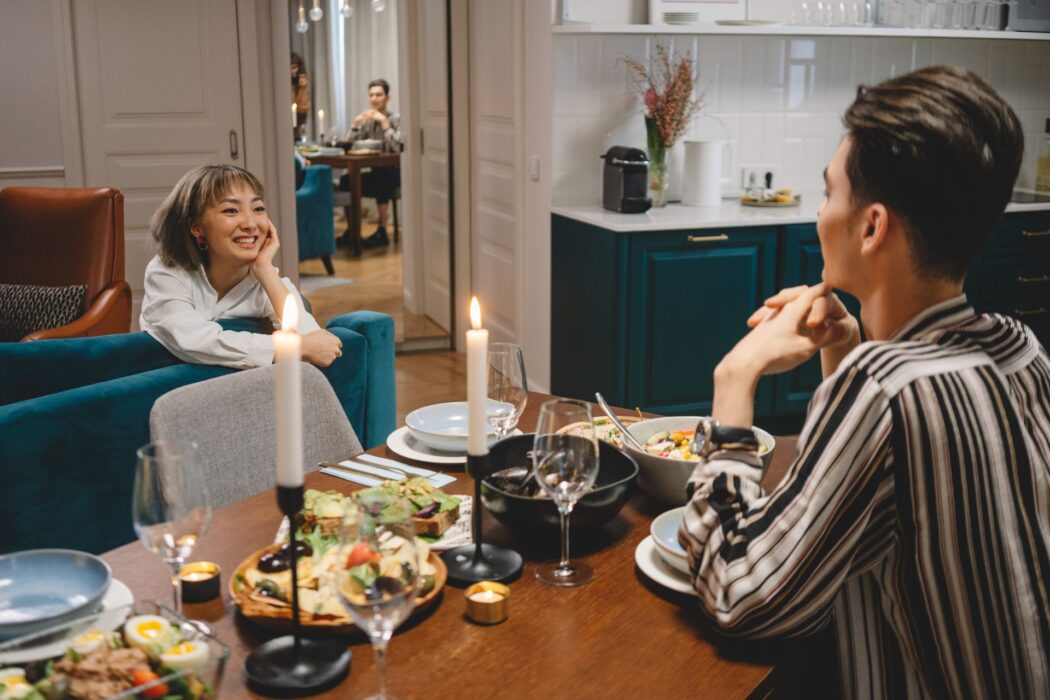
A boutique hotel dining room feels polished because every detail supports the experience, from the chair beneath you to the pool of light over the table. You can create the same sense of comfort at home without redesigning the whole room or saving your best tableware for special occasions.
Focus on details you see and touch every day. Comfortable seating, warm lighting and a well-edited tabletop can turn a rushed weeknight meal into a welcome pause.
Capture the Five-Star Feeling
Start by deciding how you want the dining area to feel. Boutique hotels usually have a clear visual identity, so choose three words to guide your decisions. “Warm, elegant and relaxed” might lead you toward soft fabrics and amber lighting, while “fresh, airy and modern” could point to pale wood, simple ceramics and crisp linen.
Next, remove anything that works against that mood. Paperwork, charging cables and half-finished projects can quickly make a dining table feel like overflow storage. Give those items a nearby home, like a lidded basket on a console or a shallow drawer for daily clutter. Clearing the surface after breakfast takes less than two minutes when everything has a designated place.
Hospitality interiors also tend to repeat materials and colors. Pick one finish, such as brushed brass or dark wood, and echo it two or three times through candleholders, a serving tray or picture frames. This creates cohesion without making the room look overly coordinated.
The best boutique hotel ideas often combine good design with small comforts. Keep a carafe close to the table, fold napkins before dinner and play music at a low volume. These simple rituals make an ordinary meal feel considered while still working for real life.
Invest in Plush, Supportive Seating
A beautiful dining room loses its appeal if the chairs become uncomfortable after 20 minutes. Look for a supportive back, a stable frame and enough cushioning for long dinners or weekend coffee. The seat should let your feet rest flat on the floor, while leaving enough space between your thighs and the underside of the table.
Measure before you shop. Most dining tables are around 28 to 30 inches high, and a gap of roughly 10 to 12 inches between the seat and tabletop is comfortable for many adults. Check the table’s apron too, since a deep frame beneath the top can reduce legroom. Allow about 24 inches of table width per person so elbows don’t compete for space.
Upholstered dining chairs can add the soft, inviting feel of boutique restaurants. Velvet works especially well when you want rich color and texture, though households with young children or pets may prefer stain-resistant fabric in a mid-tone shade. Request fabric samples where available and view them in daylight as well as under your evening lights.
You don’t have to replace every chair at once. A pair of statement seats at the ends of a rectangular table can add character while existing side chairs keep the arrangement practical. Designers often borrow these kinds of hospitality design elements to give residential rooms a more layered finish.
Layer Lighting for Mood
Good dining room lighting comes from several sources, not one bright ceiling fixture. Use a pendant or chandelier to define the table, then add a floor lamp, wall lights or a small lamp on a sideboard. Multiple light sources soften shadows and make the entire room feel warmer.
Fit dimmable bulbs where possible. Brighter light helps with breakfast, homework, and cleaning, while a lower setting creates a calmer atmosphere over dinner. Bulbs marked 2700K usually produce a warm white glow that suits dining spaces. If the room has dark walls or very little daylight, a slightly brighter bulb can keep it from feeling gloomy.
The pendant’s position also matters. A common starting point is to hang its lowest edge around 30 to 36 inches above the tabletop. This keeps the light connected to the dining area without blocking conversation across the table. For a long rectangular table, use a linear fixture or a row of two or three smaller pendants so the light reaches each place setting.
Small lamps can make a surprisingly large difference. A rechargeable lamp on a sideboard adds a gentle glow without needing a nearby outlet, and a shaded table lamp brings the intimacy of hotel lounges. Other hotel-inspired home touches show how subtle changes can shift the atmosphere of familiar rooms.
Before guests arrive, switch on the dining lights at least 15 minutes early. You’ll have time to spot harsh areas, adjust the dimmer and move candles away from serving dishes.
Curate an Uncluttered Tabletop
A hotel-style table needs breathing room. Start with one focal point that suits the surface size, such as a low bowl, a compact vase, or three candleholders grouped together. Keep the arrangement below eye level so it doesn’t interrupt conversation.
Choose table linens that can handle regular use. Washable cotton or linen-blend napkins look more polished than paper and don’t need to be perfectly ironed. A runner adds color while leaving some of the tabletop visible, which works well when the wood or stone is part of the room’s character. If you use placemats, leave a small gap between them to preserve a sense of space.
Limit each place setting to what the meal requires. A plate, glass, napkin and the correct utensils will look intentional without creating extra washing up. Neutral dishes are easy to refresh with seasonal details, such as green napkins in spring or a bowl of citrus in winter. Serving food in one or two attractive dishes also looks neater than placing assorted packaging on the table.
Boutique interiors often feel luxurious because they present practical objects carefully. A water carafe, a small dish for salt and a simple bread basket can stay within reach while contributing to the arrangement. Similar principles appear in luxury hotel styling, where texture, order and thoughtful amenities create comfort.
Leave a little empty space at the center for shared dishes. The table will still look styled once dinner is served, and no one will need to relocate an elaborate display before eating.
Your dining space should feel welcoming on an ordinary Tuesday, not only when guests come over. Set the lighting before you cook, place the water carafe on the table and pull up a chair that encourages you to stay. That quiet sense of care is what gives boutique hotel dining its lasting appeal.

No Comments